
iZotope Photon Splits Any Song Into Stems
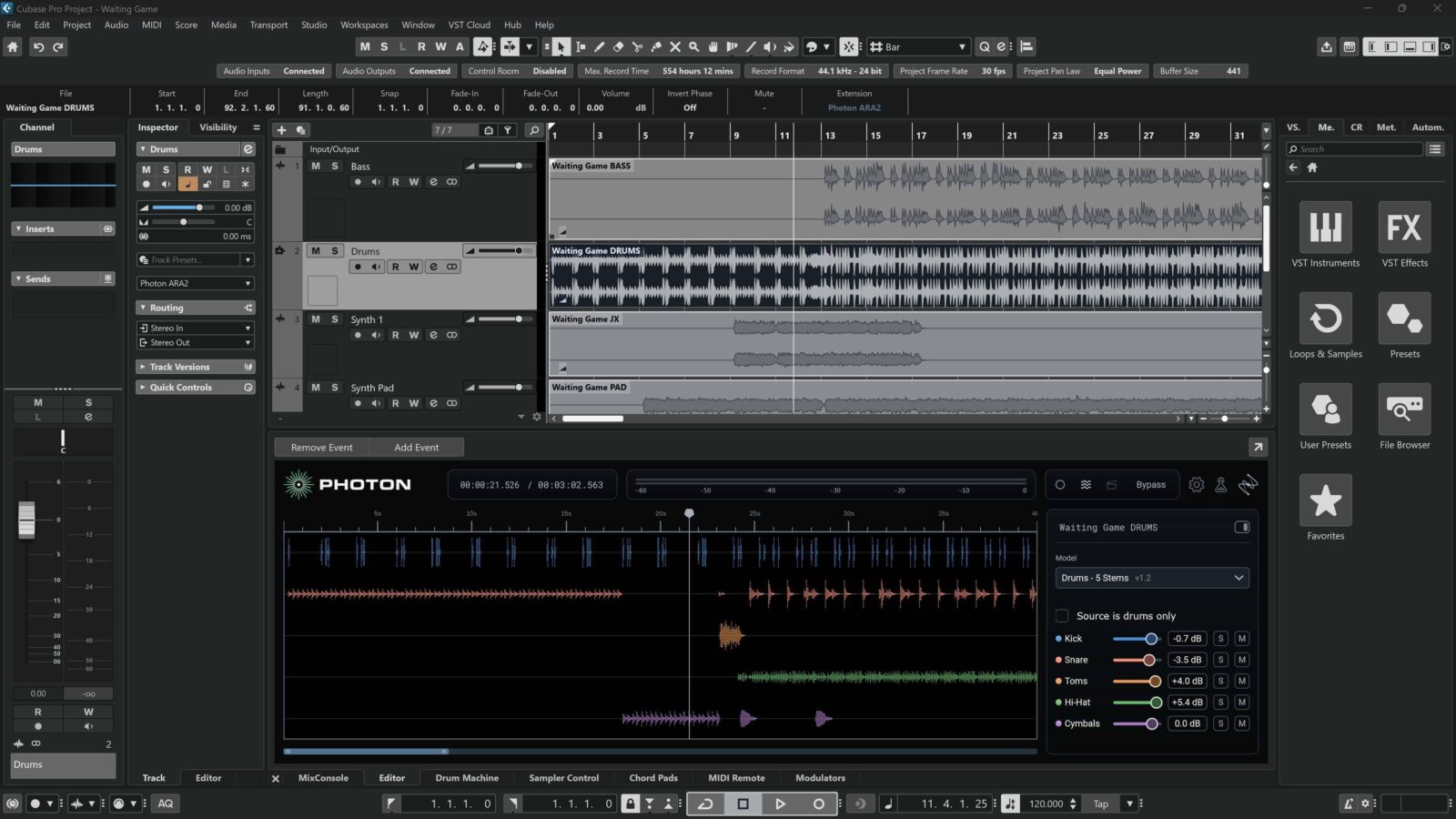
On Tuesday, November 3rd, iZotope launched Photon, a standalone app and ARA plugin built to crack a finished file open — splitting songs into stems, pulling drums apart piece by piece, and cleaning up rough audio, all on your own computer’s GPU, with nothing uploaded to the cloud. Every DJ has a record they love and a version of it that does not exist. The acapella was never released. The instrumental never serviced. The kick drum in the only copy you own, sits right on top of the bassline.
Photon is the first joint research project from iZotope and Boris FX, which acquired iZotope in July, and it arrives with 12 custom-trained machine-learning models split into two families: Demix, for separation, and Denoise, for cleanup. iZotope is pitching it at deadlines — its own launch post names “prepping a DJ edit” as one of the jobs Photon is built for. That is the right pitch. DJs already pull stems live inside their performance software. What Photon sells is the prep room: detailed, exportable stems you build at home, save as files, and carry into any set, on any system.
Split the Mix: Five Ways to Pull a Record Apart
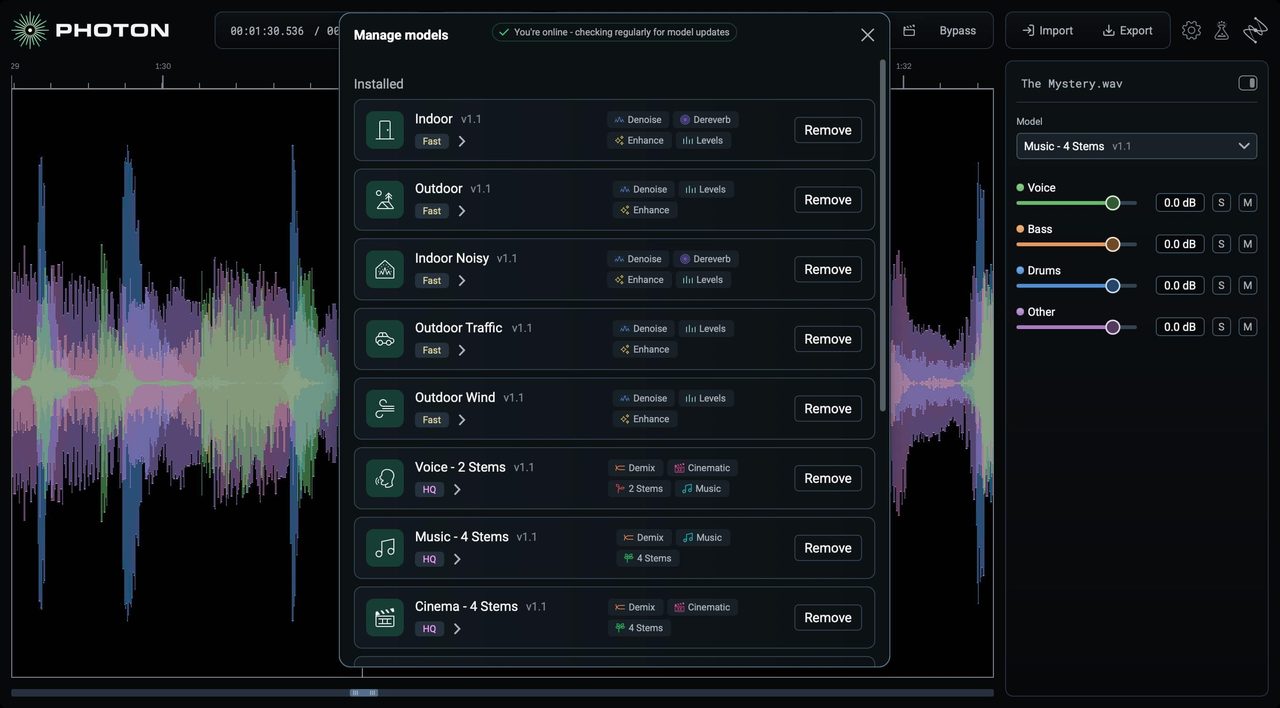
The Demix family is where DJs will live. Music – 4 Stems splits a finished song into vocals, drums, bass, and everything else, and a Music – 4 Stems Ultra model is there when a stem has to hold up on its own. Voice – 2 Stems separates voice from music for a quick acapella or instrumental. Cinema – 4 Stems divides a video or audio file into dialogue, music, sound effects, and everything else. Voice Separator splits up to six speakers from a single recording into individual stems.
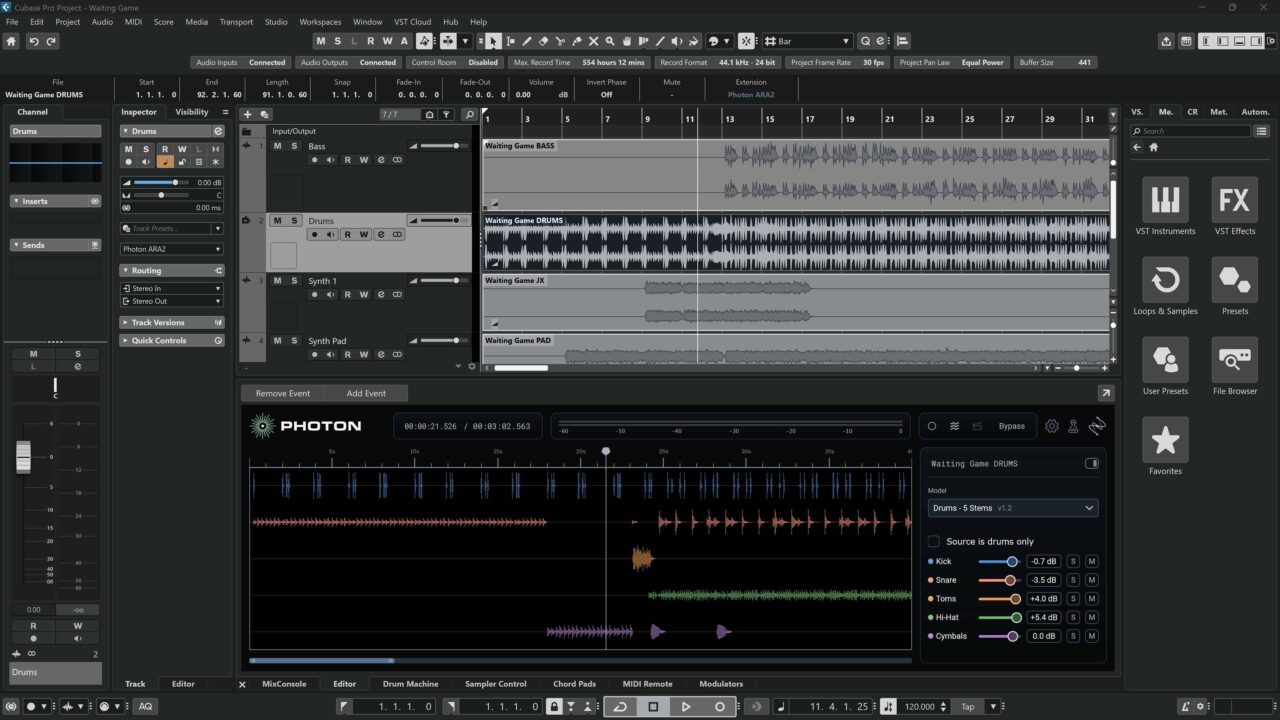
The headline act is Drums – 5 Stems. Most stem tools stop at “drums.” Photon goes inside the kit, separating kick, snare, hi-hat, toms, and cymbals from a drum bus or a full song. For an editor handed a stereo print where the kick fights the bass, that is the difference between working around a problem and actually fixing it.
The Cleanup Half: Built for Bad Rooms and Loud Streets
The Denoise family is organized by where you recorded, not by what went wrong. Voice Restore enhances speech and handles noise, levels, mic tone, and reverb in one pass. Indoor and Indoor Noisy tame room echo and loud spaces like event halls. Outdoor, Outdoor Traffic, and Outdoor Wind are trained on city noise and real gusts. For DJs, this is the mixtape and interview side of the desk: the radio rip with room noise on it, the backstage conversation recorded on a phone, the live set captured from the back of the room.
No Cloud, No Queue, No Excuses
Everything Photon does happens locally, powered by your GPU. iZotope’s reasoning is practical: your audio never leaves your machine, “which matters a lot when you’re working on embargoed material or files that aren’t yours to upload.” There are no usage cutoffs and no waiting in a queue, and preview starts from any point in the clip, so long files do not have to render end to end before you hear a result. New and updated models arrive through a Model Manager, with no reinstall required.
The trade-offs are real. Photon runs standalone or as an ARA2 plugin in hosts including Pro Tools, REAPER, and Cubase on Mac and Windows, plus Sequoia and Samplitude on Windows — but there is no conventional VST3 or AU insert version. On the Mac it needs macOS 14 or later on Apple silicon — Intel Macs are not supported — and Windows machines need a GPU with at least 4 GB of VRAM, with 16 GB of RAM recommended. It opens audio and video formats from WAV and FLAC to MP4 and MOV, and exports WAV, FLAC, and MP3, or video with the original picture kept.
The Price Question: $349 in a World of Free Splitters
Photon costs $349, with an introductory price of $259 through December 7, 2026, and subscription options at $19 a month or $119 a year. Existing iZotope customers get crossgrade deals, and Production Expert reports RX Advanced owners can pay as low as $49 during the launch window. Context matters here: Production Expert notes that the closest job inside iZotope’s own range used to mean RX 12 Advanced at $1,399, and that rival SpectraLayers Pro 12 costs about the same as Photon at $349.99.
The pushback is just as clear. “At $349, Photon is a lot to pay for vocal and instrumental splits that free DAW tools now handle,” Production Expert wrote, pointing to the free stem splitter already inside Logic Pro and the lower-priced RipX DAW Pro at $198. Whether Photon’s models out-separate the free options is, as of launch week, still untested in published head-to-head comparisons.
Our take: Photon is not a booth tool, and it is not priced like one. It is a prep tool for DJs who build edits, acapella transitions, and remix material — and who would rather split a record at home, on their own machine, than upload unreleased audio to somebody else’s server and wait. If your stem work is a quick live blend, your DJ software already has you covered for free. If your stem work is the record itself, $259 before December 7 is a serious look.



Leave a Reply